Product Overview
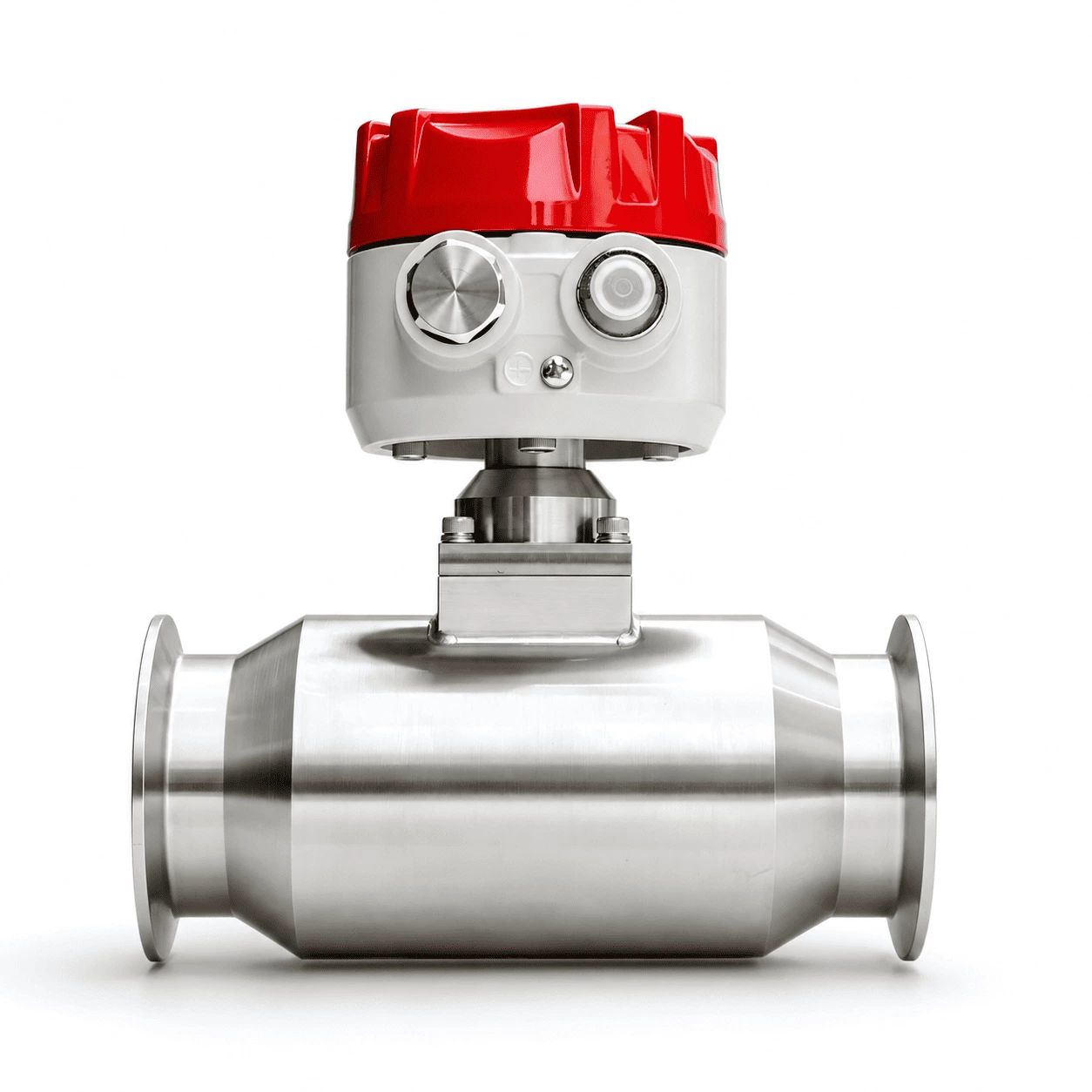
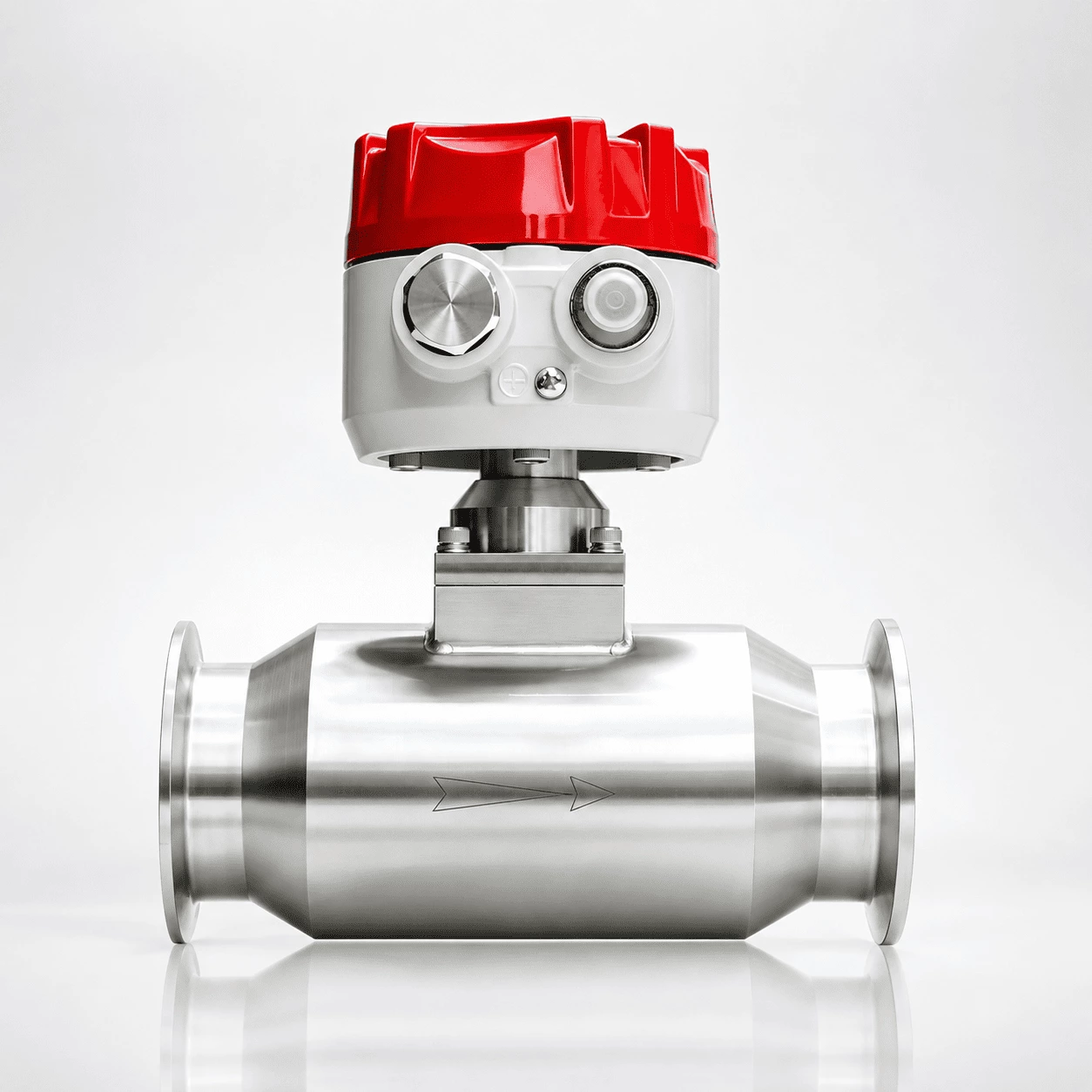
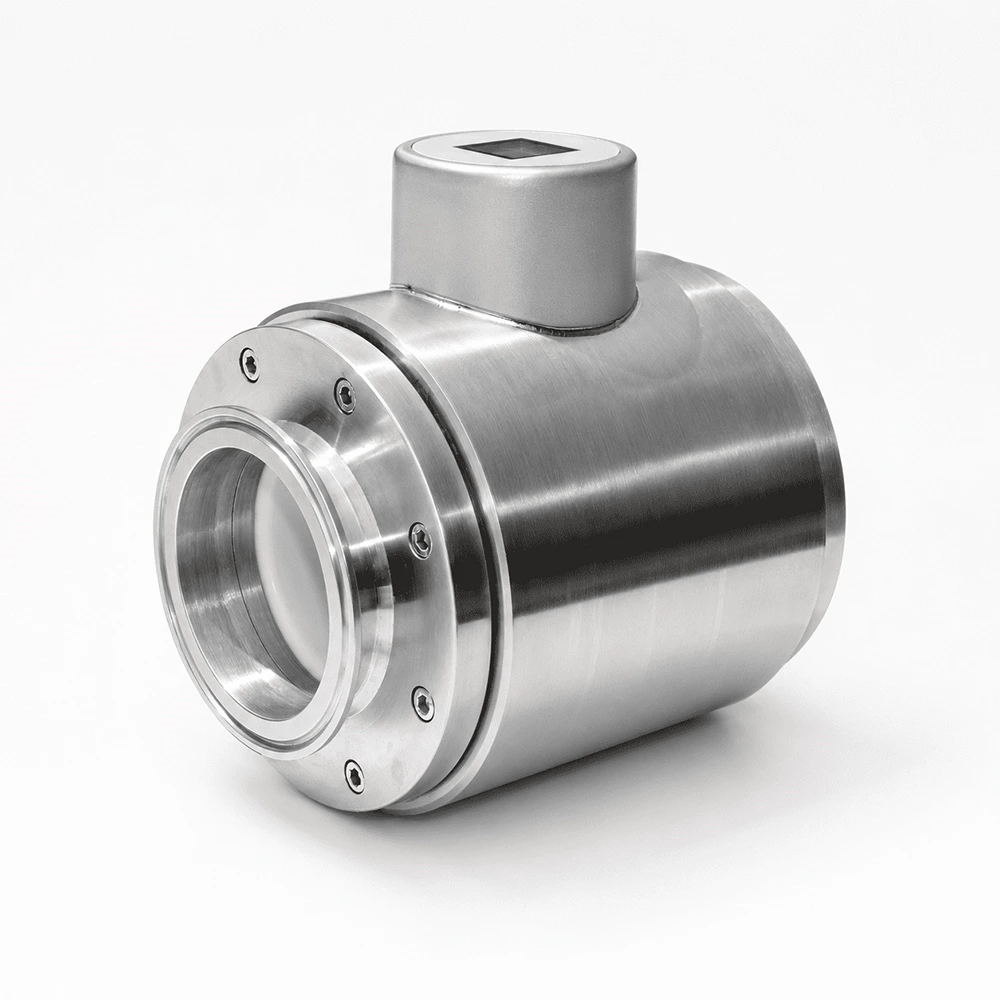
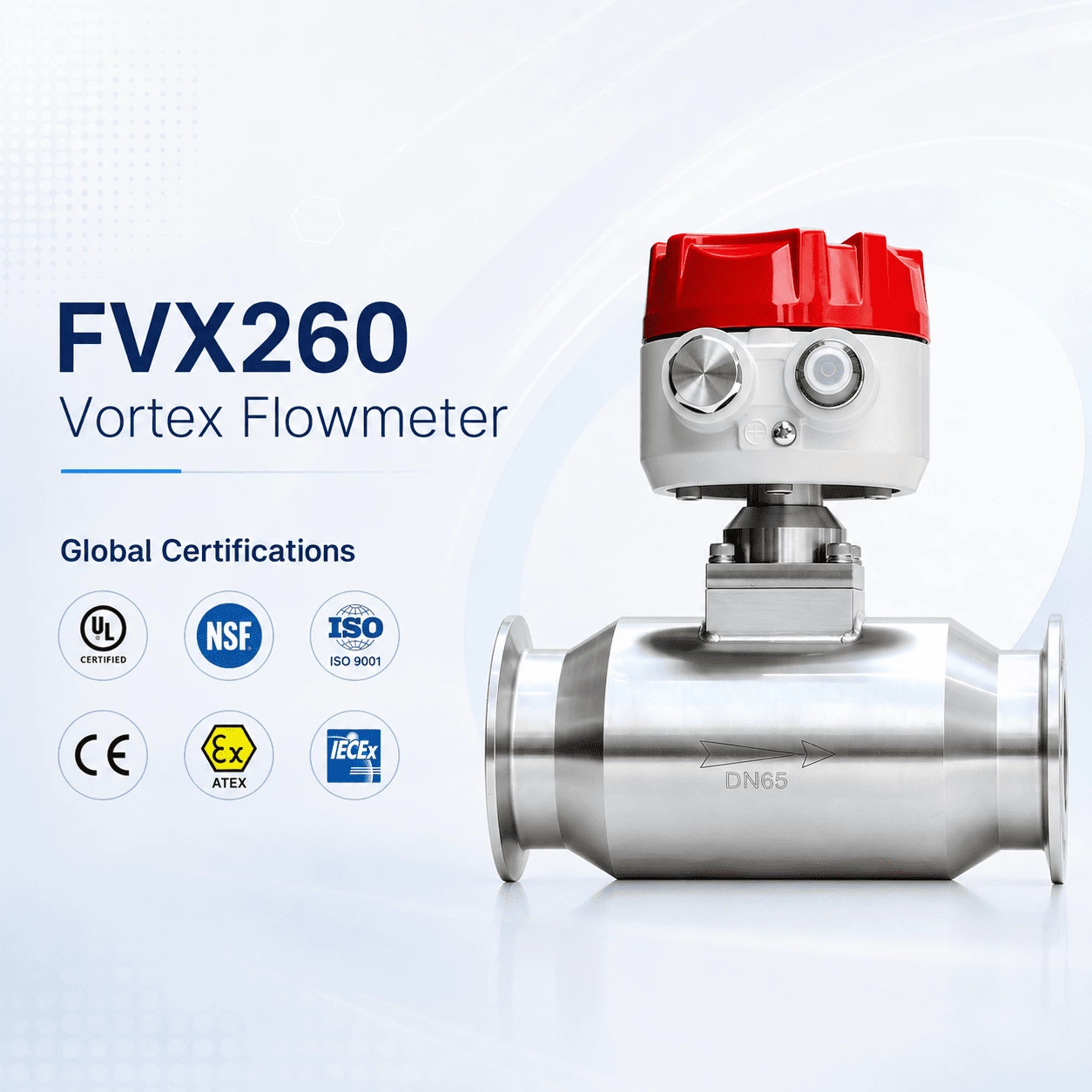
The SUP-FVX260 vortex flowmeter is designed for flow measurement of liquids in industrial pipelines. It uses the Karman vortex street principle to detect vortices generated downstream of a shedder bar and converts the vortex frequency into the corresponding fluid flow rate.
Designed for conventional industrial applications, the FVX260 combines a streamlined structure with reliable flow measurement performance. It supports a two-wire 4-20 mA output, operates from a 24 VDC power supply, and is available in nominal diameters from DN15 to DN200.
Key Features
Compact and Lightweight Design
Up to 20:1 Range Ratio
Two-Wire 4-20 mA Output
Input and Output Protection
Contract Metering Function
Cost-Effective Flow Measurement
Designed for Liquid-Cooling Equipment
Working Principle
The FVX260 operates according to the Karman vortex street principle. When liquid flows through the meter body and passes the shedder bar, alternating vortices are generated on both sides of the bluff body.
The vortex shedding frequency is directly proportional to the fluid velocity. The flow sensor detects the vortex frequency, from which the fluid velocity is calculated. Combined with the flowmeter diameter and calibrated instrument coefficient, the meter determines the instantaneous volumetric flow rate.
F = St × V / md
Q = 3600 × F / K
-
F = vortex shedding frequency
-
V = fluid velocity
-
Q = instantaneous volumetric flow
-
K = instrument coefficient
Technical Specifications
| Parameter |
Specification |
| Product |
Vortex Flowmeter |
| Model |
SUP-FVX260 |
| Measured Variable |
Flow |
| Applicable Medium |
Liquid |
| Nominal Diameter |
DN15-DN200 |
| Range Ratio |
1:1 to 20:1 |
| Flow Accuracy |
Class 1.0 / 1.5 |
| Output |
Two-wire 4-20 mA |
| Power Supply |
24 VDC ±10% |
| Electrical Interface |
4-pin M12 round aviation connector |
| Medium Temperature |
-40 to 80 °C |
| Pressure Rating |
Class 150 |
| Flange Standard |
GB/T 9124-2019 |
| Protection Rating |
IP65 |
| Optional Protection |
IP66 / IP68 available upon agreement |
| Pressure Loss |
Compliant with JB/T 9249-2005, Cd ≤2.4 |
| Ambient Temperature |
-40 to 80 °C |
| Ambient Humidity |
5%-90% RH |
| Atmospheric Pressure |
86-106 kPa |
| Storage Temperature |
-40 to 80 °C |
| Storage Humidity |
<95% RH |
| Implementation Standard |
JB/T 9249-2015 Vortex Flowmeter |
Applications
Industrial Liquid Flow Measurement
Reliable monitoring of liquid flow in conventional industrial piping systems where compact installation and standardized 4-20 mA signal output are required.
Liquid-Cooling Systems
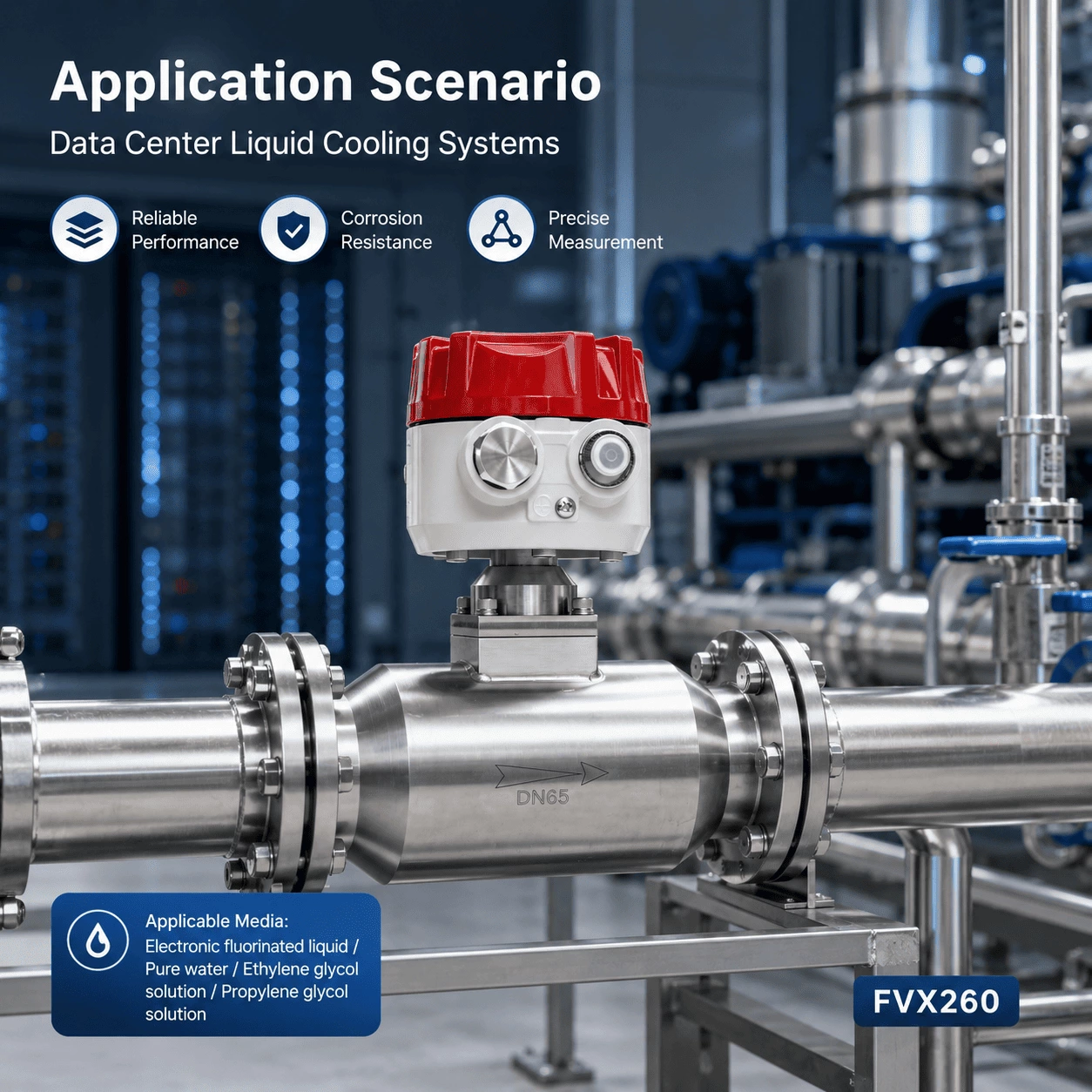
Compact flow measurement for integrated liquid-cooling equipment and densely arranged cooling pipelines where installation space is limited.
Data Center Liquid Cooling
The compact FVX260 can be integrated into liquid-cooling infrastructure for high-density computing environments, providing liquid flow measurement in cooling distribution and equipment-level piping where installation space is constrained.
Cooling Equipment & Thermal Management
Suitable for liquid flow monitoring in compact cooling equipment and thermal-management piping systems.
Process Liquid Monitoring
Suitable for general industrial applications requiring continuous liquid flow measurement through a two-wire 4-20 mA interface.
Frequently Asked Questions
Q: What medium can the SUP-FVX260 measure?
The FVX260 is specified for liquid flow measurement.
Q: What pipe sizes are available for the FVX260?
The FVX260 is available for nominal pipe sizes from DN15 to DN200.
Q: What is the maximum range ratio?
The specified range ratio is from 1:1 up to 20:1.
Q: What output signal does the FVX260 provide?
The FVX260 uses a two-wire 4-20 mA current output.
Q: What power supply does the FVX260 require?
The meter operates with a 24 VDC ±10% power supply.
Q: Is the FVX260 suitable for liquid-cooling systems?
Yes. Its compact size and lightweight design make it suitable for space-constrained installations, including densely arranged pipelines and integrated liquid-cooling equipment.
Q: How should I select the correct FVX260 size?
The meter should be selected according to the actual operating flow range rather than pipeline diameter alone. For better measurement performance, the normal operating flow should preferably fall within the middle portion of the selected measuring range.