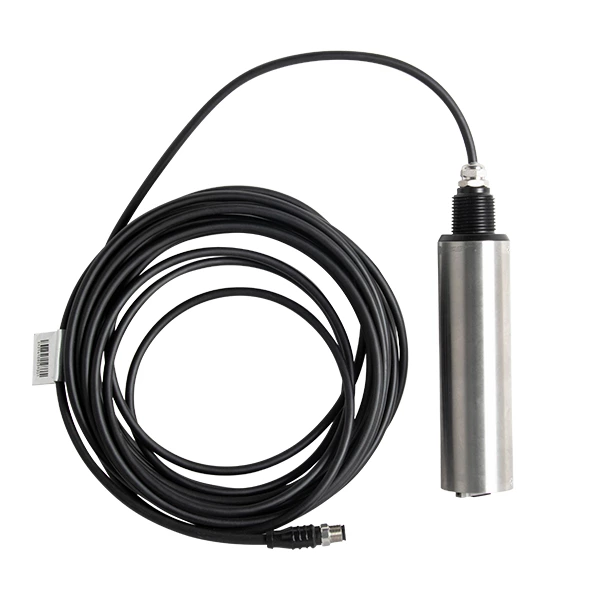
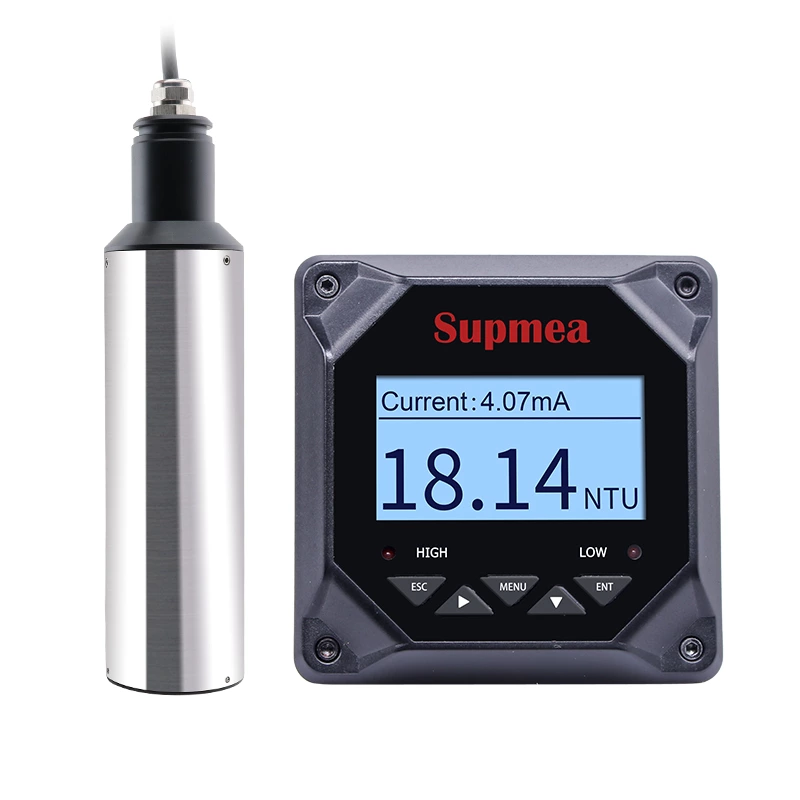
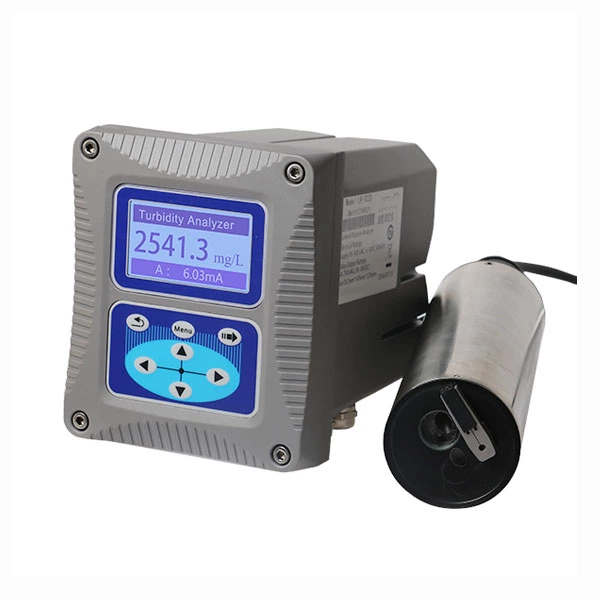
Parameters
| Measured Variables |
Turbidity |
| Measuring Methods |
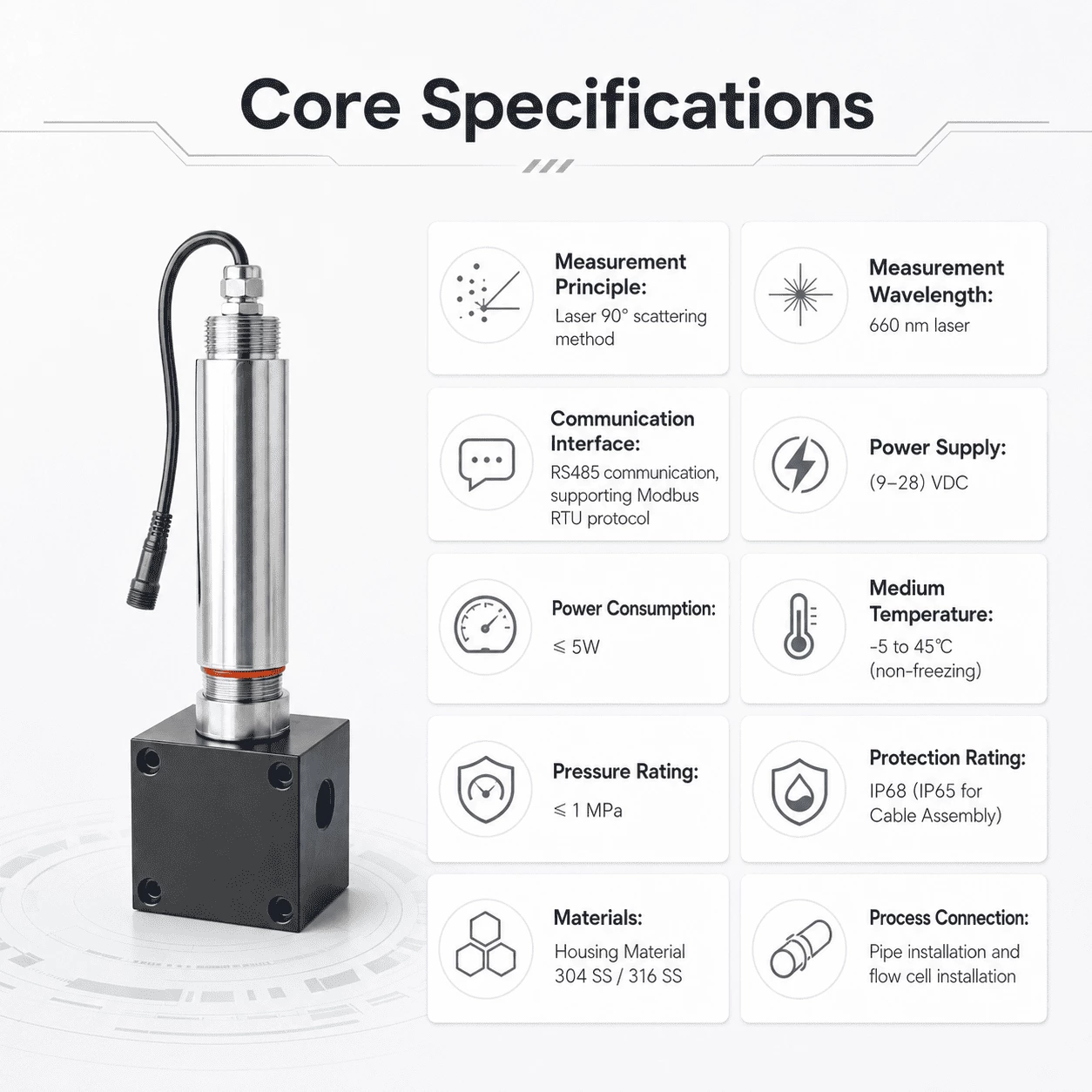
Laser 90° Scattering Method (Laser Light Source) |
| Light Source |
860nm Laser |
| Measuring Range |
(0~100)NTU |
| Accuracy |
2% or 0.05NTU (whichever is greater) (based on Formazin primary turbidity standard solution at 25°C) |
| Resolution |
0.001NTU |
| Repeatability |
≤1% |
| Reading Stability |
≤1.5% |
| Zero Drift |
≤1.5% |
| Response Time |
T90≤120s |
| Transmitter Output |
(4~20)mA, user-configurable measurement range |
| Communication Output |
RS485 Interface,Modbus-RTU Communication Protocol |
| Power Supply |
(9~28)VDC |
| Power Consumption |
≤5W |
| Sample Flow Rate |
(100~1000)mL/min(recommended 500mL/min) |
| Pressure Resistance |
≤0.6MPa or water depth≤ 60m |
| Operating Temperature |
(-5~45)℃(Non-freezing environment) |
| Calibration Method |
Factory pre-calibrated with default calibration curve; supports single-point calibration, two-point Formazin calibration, and 2–6 point customized calibration |
| Housing Material |
ABS and POM plastics |
| Protection Rating |
IP68 |
Principle
The turbidity measurement method is based on the laser 90° scattering technique. A laser beam is directed vertically from the air into the water. Suspended particles in the water scatter the laser, and a sensor positioned at a 90° angle to the incident light detects the scattered intensity. The signal is then converted into turbidity values according to calibration curves.
Features
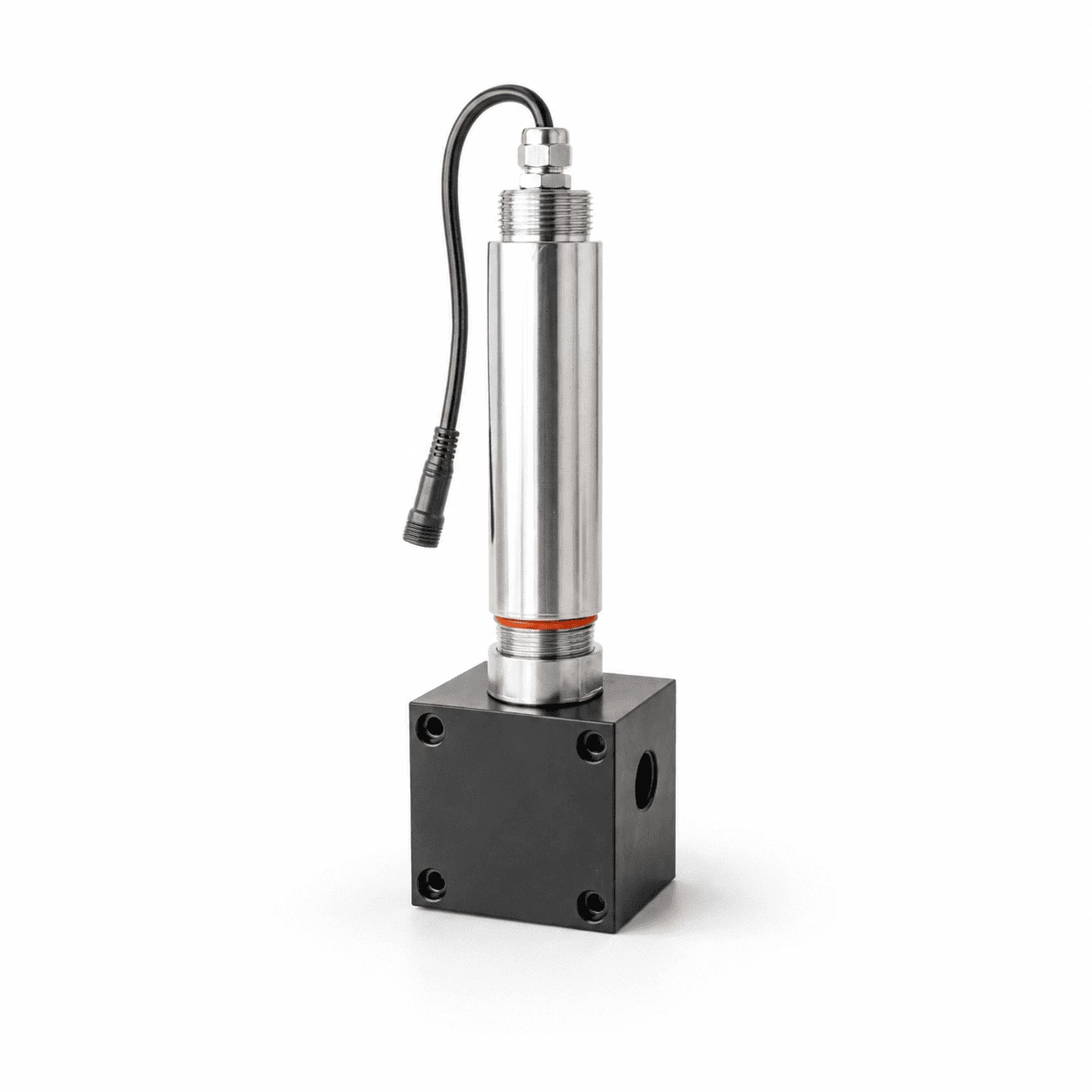
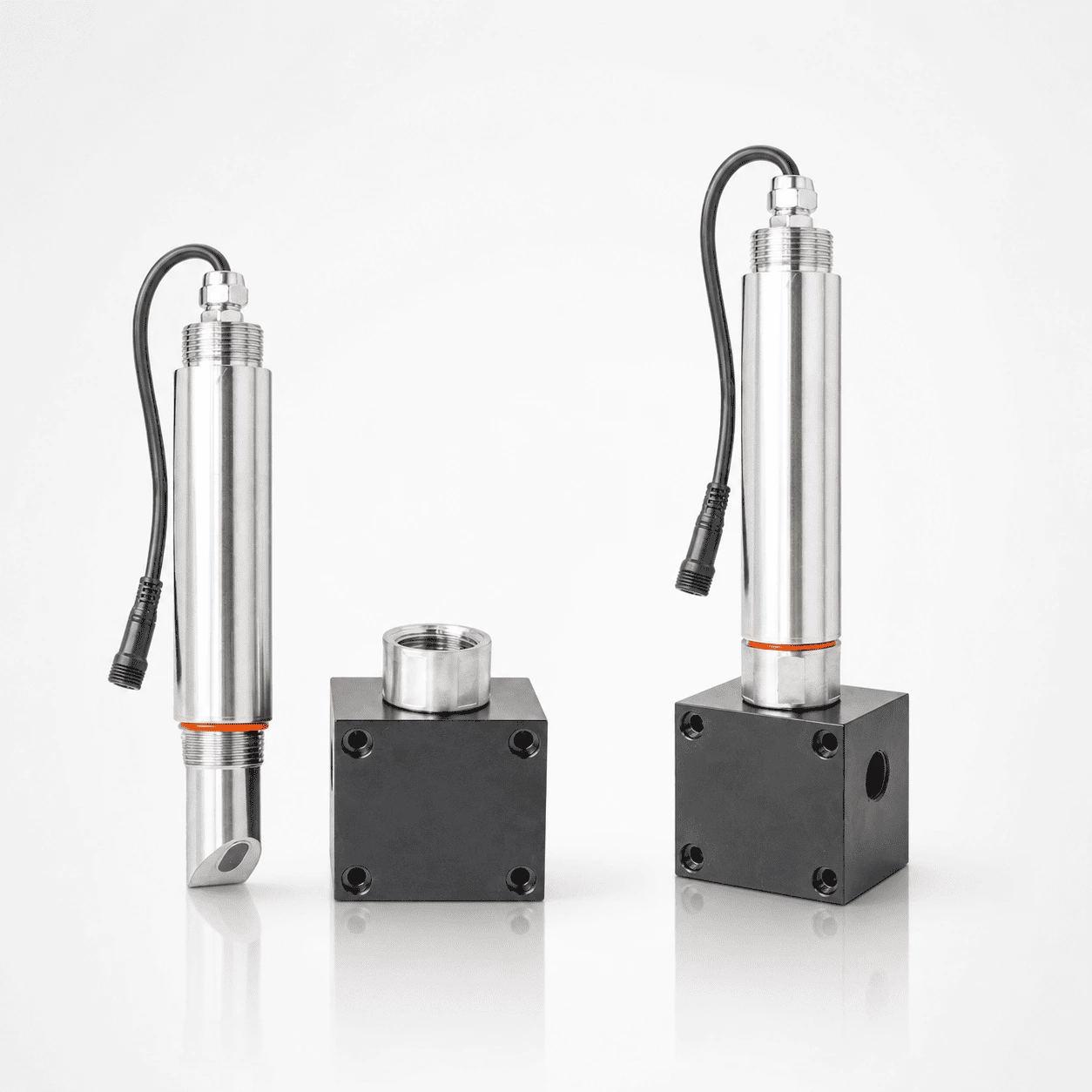
- Compact size, easy for system integration.
- Simple structure, convenient for cleaning and maintenance.
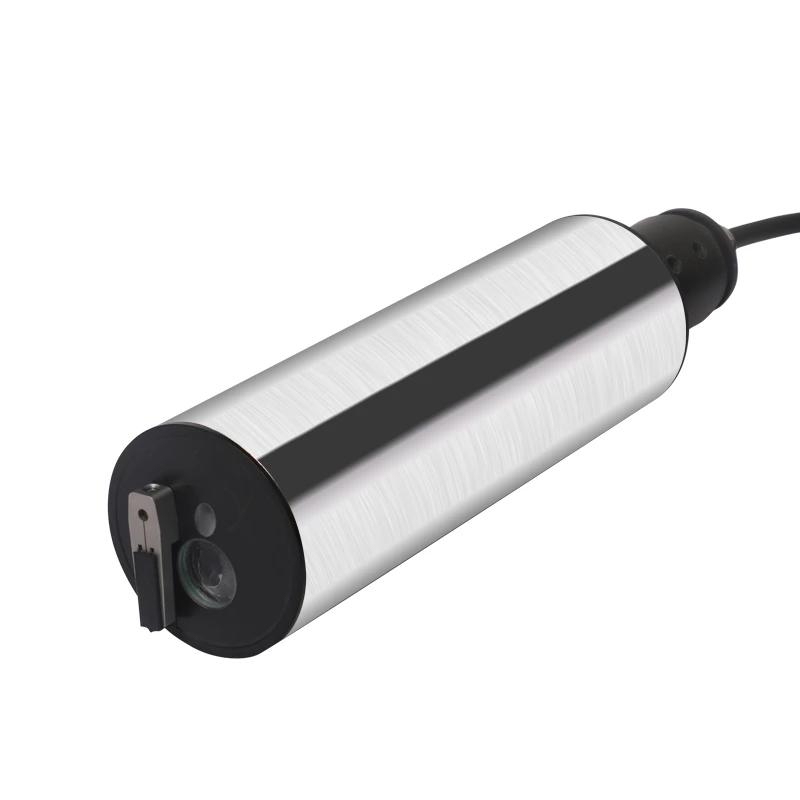
- Slanted optical window to minimize bubble adhesion.
- Sealed construction, resistant to water ingress and high pressure.
- IP68 protection, suitable for submersible installation.