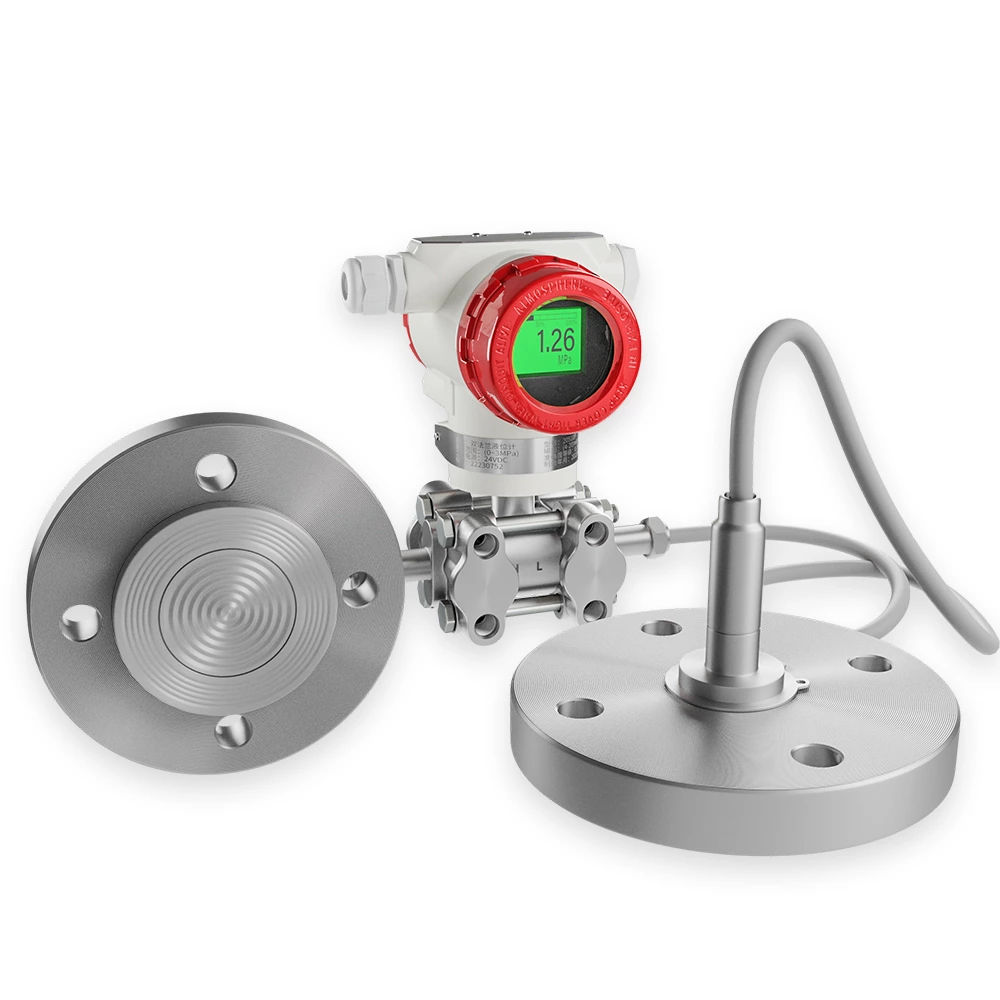
| Product Type |
Gauge pressure transmitter with differential interfaces |
| Measuring Range |
-400 mbar to 50 bar |
| Minimum Span |
8 mbar to 500 mbar |
| Accuracy |
Premium: ±0.04% span; Standard: ±0.065% span |
| Long-term Stability |
±0.1% URL / 10 years |
| Response Time |
≤100 ms |
| Measuring Media |
Gas, liquid or vapor |
| Output Signal |
2-wire 4–20 mA / HART |
| Supply Voltage |
10.5–45 VDC; max. 28 VDC for intrinsic safety applications |
| Temperature Range |
Ambient: -40 to +85°C; Process: -40 to +120°C |
| Relative Humidity |
0–95% RH |
| Damping |
Adjustable from 0 to 100 s |
| Electrical Connection |
M20×1.5 female or 1/2-14 NPT female |
| Process Connection |
1/4-18 NPT female |
| Local Interface |
Optional LCD display, 3-button local operation, HART communication |
| Wetted Materials |
316L stainless steel or Hastelloy C-276 diaphragm; 316L stainless steel process connection |
| O-ring Material |
NBR, FKM or PTFE |
| Housing |
Die-cast aluminum alloy, polyester coating |
| Ingress Protectio |
IP65 / IP67 |
| Filling Fluid |
Silicone oil |
| Weight |
Approx. 3.6 kg |
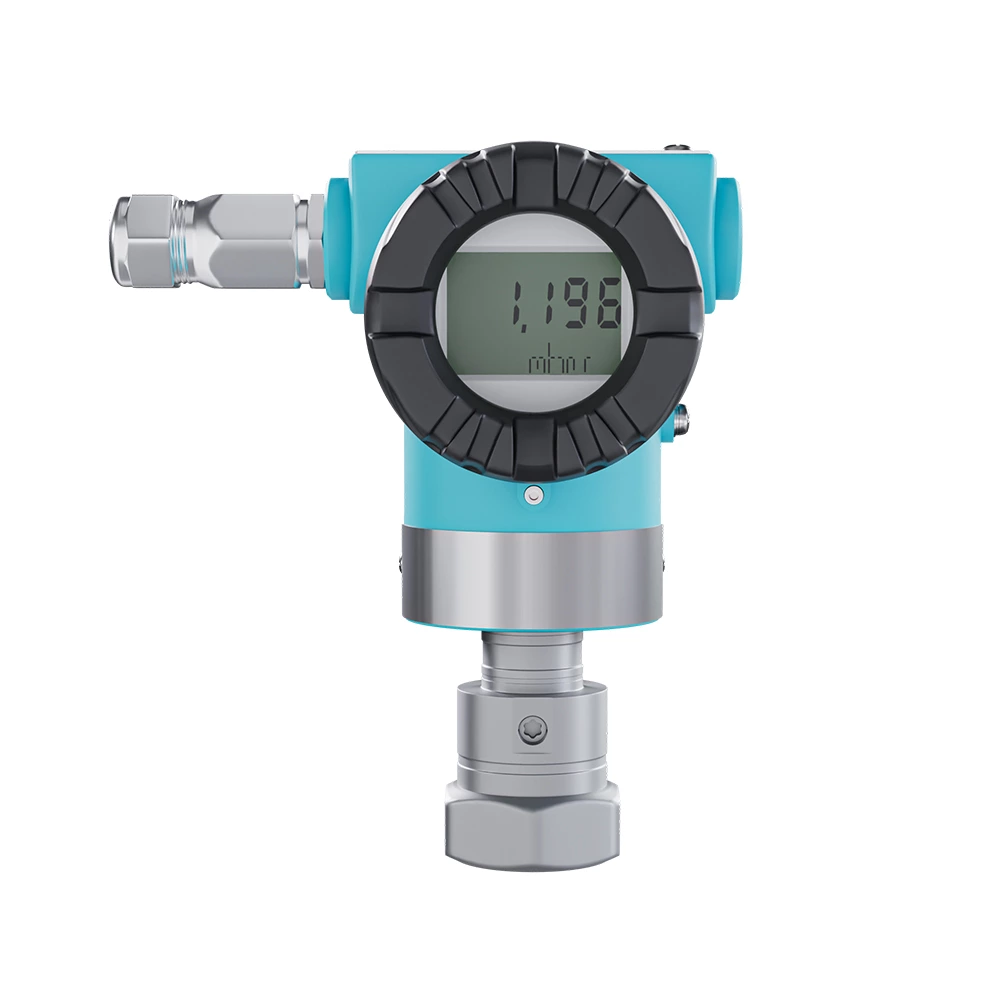
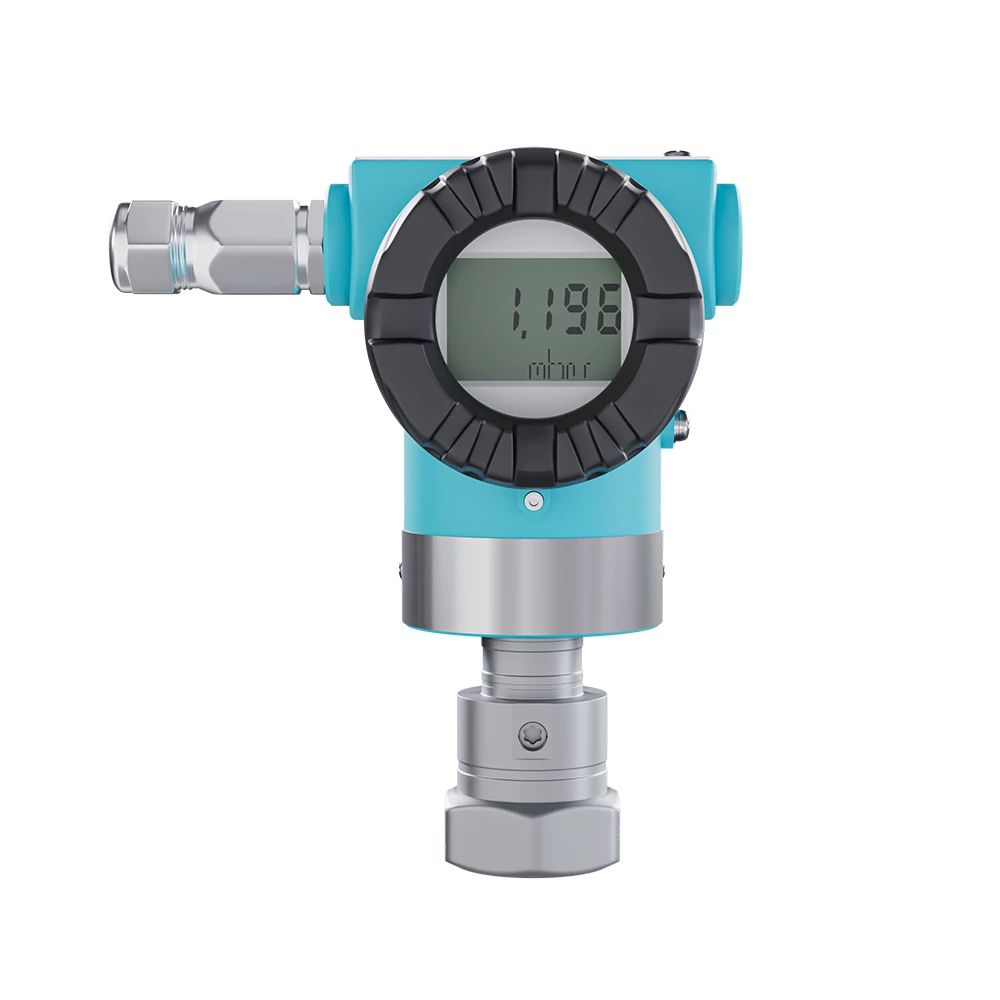
The RTX2400-K is a gauge pressure transmitter with differential interfaces from the RTX2000 series. Its dual 1/4-18 NPT female process connections with H-side (high/positive) and L-side (low/negative) ports can be swapped in the field, making it a flexible solution for gauge and differential-interface measurement of gas, liquid, and vapor. It offers Premium accuracy down to ±0.04% span, long-term stability of ±0.1% URL over 10 years, and a two-wire 4–20 mA / HART® 7 output. With measuring ranges from -400 mbar to 50 bar, wetted parts in stainless steel 316L or Hastelloy C-276, an IP65/IP67 aluminum housing, and optional NEPSI hazardous area approvals, the RTX2400-K is engineered for demanding process installations.
Premium accuracy down to ±0.04% span
Accuracy includes terminal-based conformity, hysteresis, and repeatability. A Standard accuracy option of ±0.065% span is also available.
Differential interfaces with field-swappable H/L ports
The H-side (positive, high-pressure) and L-side (low-pressure) ports can be exchanged on site. In standard condition, the H-side process pressure inlet is located on the right side of the transmitter. Swap torque: 40 N·m for drain valve and blind plug, 5 N·m for the bleed screw.
Ranges from -400 mbar to 50 bar
Four range with minimum spans from 8 mbar, covering low differential-interface measurements through 50 bar gauge applications.
±0.1% URL stability over 10 years
Long-term stability keeps calibration intervals long and maintenance cost low across the transmitter lifecycle.
Two-wire 4–20 mA / HART® 7 output
Loop-powered from 10.5 to 45 Vdc (≤ 28 Vdc for intrinsically safe applications). Configure via local 3-button operation or HART®; up to 16 HART® devices can coexist in multidrop mode.
Overpressure protection with 250 bar containment
Depending on range code: overpressure from 600 mbar to 75 bar, burst pressure from 6 to 120 bar, and containment pressure of 250 bar.
Built for harsh environments
Die-cast aluminum ADC12 housing with polyester coating, IP65/IP67 protection, ambient -40 °C to +85 °C, process temperature -40 °C to +120 °C, 3.6 kg weight, and 270° housing rotation for optimal wiring and viewing orientation.
The RTX2400-K measures gas, liquid, or vapor through its differential interfaces and supports low-span measurements down to 8 mbar. Typical use cases include:
• Gauge pressure measurement requiring differential interfaces with H/L sides
• Low-span differential-interface measurement from 8 mbar
• Steam, gas, and liquid process measurement with impulse lines (condensate pot recommended for steam)
• Hazardous area installation with NEPSI Ex ia / Ex db / Ex ec / Ex tb approvals
• Two-valve manifold installations for isolation and maintenance
Q: Can the pressure ports be swapped in the field?
A: Yes. The RTX2400-K can exchange its pressure ports on site. For the side drain valve version, the original process connection component can be swapped with the process blind plug; for the rear drain valve version, it can be replaced with the drain valve. Torque: 40 N·m for the drain valve and blind plug, 5 N·m for the bleed screw. In standard condition, the H-side process pressure inlet is located on the right side.
Q: What do H-side and L-side mean?
A: The H-side is the positive (+), high-pressure side; the L-side is the negative (-), low-pressure side. After installation, ensure the H and L ports are aligned on the same horizontal level.
Q: What should be considered when measuring low differential pressure?
A: The L-side must have a stable reference pressure. If the reference is atmospheric, ensure there is no wind — place the transmitter inside an enclosure or route the L-side into a windproof box.
Q: Is a valve manifold available?
A: Yes. A two-valve manifold is available not assembled (V1) or assembled to the transmitter (V2); VN means no manifold is provided. Minimum installation torque is 30 N·m.
Q: What media can be measured?
A: Gas, liquid, or vapor, with process temperatures from -40 °C to +120 °C. For steam service, install a condensate pot to reduce measurement errors caused by condensation in the impulse lines.