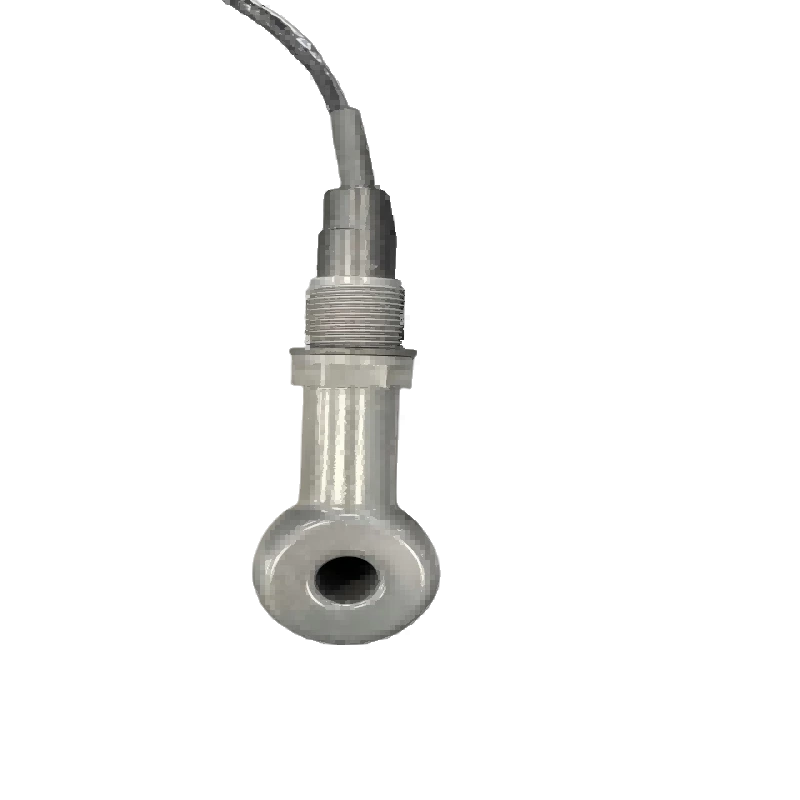
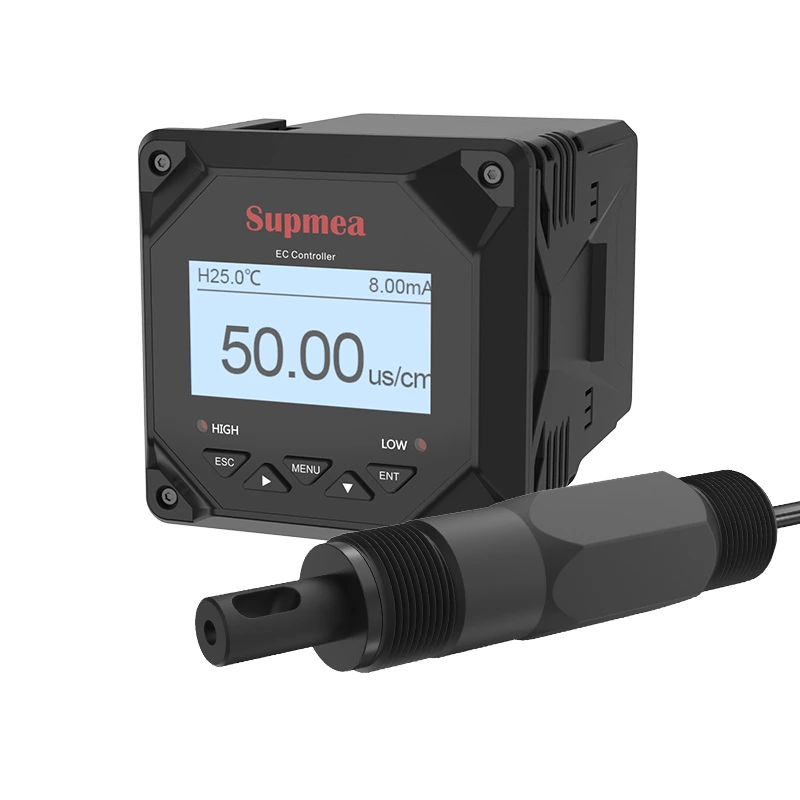
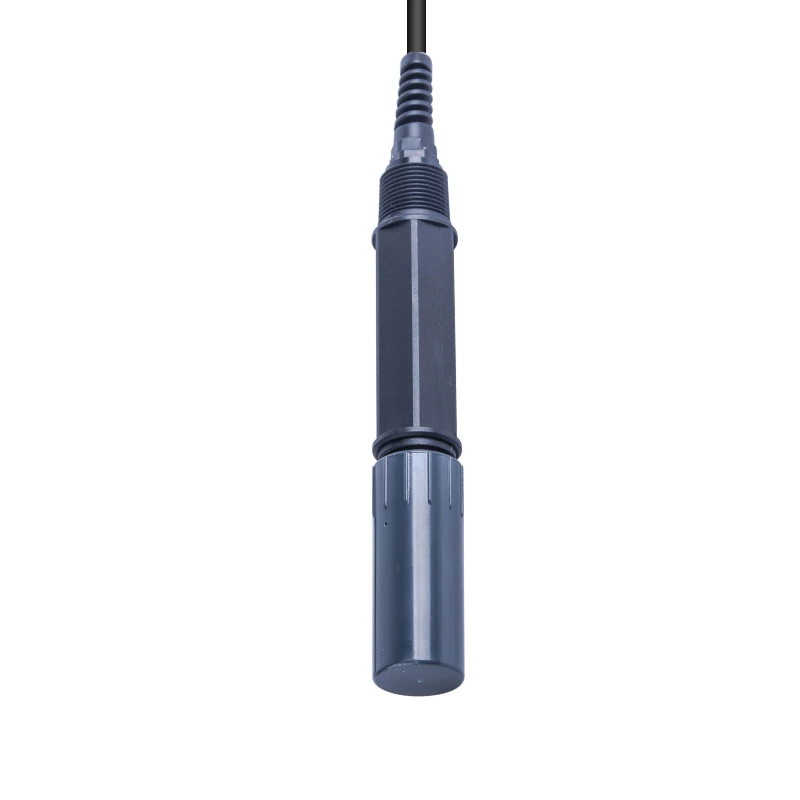
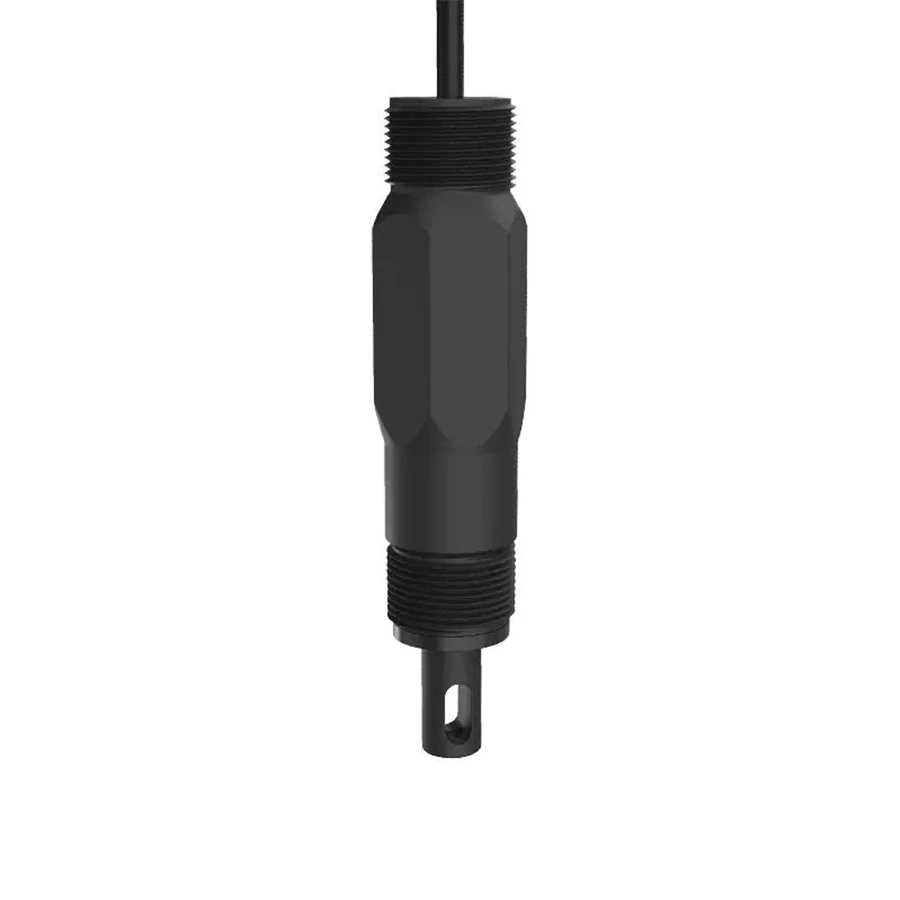
SUP-ADE3530 sensor integrates signal measurement, conversion and communication functions in one compact structure. It outputs processed digital data through an RS485 interface, reducing signal distortion and making it easy to connect with PLCs, industrial computers, touch screens and other automation systems.
With PP, PFA and PEEK wetted material options, the ADE3530 can be used in corrosive media and high-temperature applications. It is widely used in chemical process control, water and wastewater treatment, seawater salinity monitoring, textile dyeing processes, food processing, pulp and paper, power generation, mining and metal surface treatment.
Digital Sensor with RS485 Modbus-RTU Output
The sensor directly outputs digital measurement data through RS485 communication and supports the Modbus-RTU protocol. It can be connected to PLCs, industrial computers and monitoring systems without requiring an additional transmitter for basic digital data transmission.
Integrated Measurement Conversion
Measurement conversion is completed inside the sensor. The sensor directly outputs processed conductivity, temperature and related measurement values, helping reduce wiring complexity and signal loss.
Wide Conductivity Measuring Range
The conductivity measuring range is 2 μS/cm to 2000 mS/cm, making the sensor suitable for a wide variety of low-, medium- and high-conductivity liquids.
Multiple Measurement Variables
The ADE3530 supports measurement of conductivity, TDS, salinity, temperature and concentration, helping users monitor liquid quality and process concentration with one digital sensor.
Chemical-Resistant Wetted Materials
PP, PFA and PEEK wetted material options are available for different chemical compatibility and temperature requirements. The PEEK high-temperature version supports operating temperatures up to 180°C.
Low Maintenance Inductive Structure
The large annular sensing area and inductive measuring structure help reduce maintenance requirements, especially in industrial media where electrode fouling or polarization may affect traditional contact sensors.
Flexible Installation
The sensor supports multiple installation methods, including flange installation, clamp installation, immersion installation and flow-through installation, making it adaptable to different pipelines, tanks and process systems.
Measuring Principle
The SUP-ADE3530 uses the electromagnetic induction principle to measure liquid conductivity and concentration. The sensor contains two coils: an excitation coil and a measuring coil. The excitation coil generates an alternating electromagnetic field, and the measuring coil detects the induced current generated through the liquid medium.
The induced current is proportional to the conductivity of the solution. The sensor processes this current signal and converts it into conductivity or concentration measurement data. This non-contact inductive measuring method is especially suitable for conductive liquids such as acids, alkalis, salts and process solutions.
Technical Specifications
| Item |
Specification |
| Product name |
SUP-ADE3530 Inductive Conductivity Sensor |
| Measured variables |
Conductivity, TDS, salinity, temperature, concentration |
| Conductivity range |
2 μS/cm – 2000 mS/cm |
| TDS range |
0 ppm – 1,000,000 ppm |
| Salinity range |
0 ppt – 200 ppt |
| Temperature range |
-20°C – 180°C |
| Electrode constant |
K = 2.1 cm⁻¹ |
| Accuracy |
±5% of measured value |
| Resolution |
0.001 mS/cm |
| Repeatability |
< ±2% |
| Response time |
< 2 s |
| Temperature compensation |
Pt1000 |
| Communication output |
RS485, Modbus-RTU |
| Power supply |
9–25 VDC |
| Power consumption |
≤ 0.2 W |
| Process pressure |
≤ 2.1 MPa |
| Ambient temperature |
-10°C – 50°C |
| Storage temperature |
-10°C – 60°C |
| Protection rating |
IP68 |
| Wetted material |
PP / PFA / PEEK |
| Housing material |
POM / PVC / 316 stainless steel / PPS |
| Common mounting accessory material |
PP / 316 stainless steel / PTFE |
Installation
The sensor should be installed so that the medium can flow through the opening of the sensor. During operation, the sensor must be completely immersed in the medium.
When the sensor is installed in a small pipe or confined space, conductivity measurement may be affected by the pipe wall. An installation factor can be used to compensate for this effect. When the distance between the sensor and the pipe wall is large enough, generally greater than 15 mm and with pipe diameter ≥ DN80, the installation factor can be set to 1.00.
Available installation methods include:
Applications
The SUP-ADE3530 inductive conductivity sensor can be used in the following industries and processes:
Chemical Industry
Conductivity and concentration monitoring in sulfuric acid, hydrochloric acid, nitric acid, sodium hydroxide, sodium chloride, phosphate, fertilizer, cleaning agents and chemical quality control processes.
Water & Wastewater
Ion exchange, regeneration monitoring, reverse osmosis, scrubber liquid monitoring, softener regeneration and wastewater conductivity measurement.
Power Generation
Boiler blowdown monitoring and flue gas desulfurization process control.
Food & Beverage
Alkali concentration monitoring, CIP cleaning, washing water monitoring, desalting, fermentation and evaporation process control.
Mining & Metal Processing
Alkali/aluminum ratio control, continuous steel pickling, plating bath monitoring, heavy metal recovery and copper flotation processes.
Textile & Dyeing
Water quality monitoring, rinse water, purification tanks, carbonizing baths, alkalizing baths, boiler feedwater systems and pickling processes.
Seawater & Environmental Monitoring
Seawater salinity, river and lake salinity, water pollution and general liquid quality monitoring.
Frequently Asked Questions
Q: What is an inductive conductivity sensor?
A: An inductive conductivity sensor measures conductivity based on electromagnetic induction. It uses an excitation coil and a measuring coil to detect the induced current generated through the liquid medium. The induced current is proportional to the conductivity of the solution.
Q: What media can the SUP-ADE3530 measure?
A: The sensor is suitable for conductive liquids such as acids, alkalis, salts, seawater, wastewater, plating solutions, slurry and chemical process liquids. It can also support concentration measurement for selected chemical solutions.
Q: Does the ADE3530 require an additional transmitter?
A: For digital communication applications, the sensor integrates measurement conversion inside the sensor and directly outputs RS485 Modbus-RTU signals. It can transmit digital data to PLCs, industrial computers and touch screens.
Q: What is the conductivity measuring range?
A: The conductivity measuring range is 2 μS/cm to 2000 mS/cm.
Q: What materials are available for the wetted parts?
A: The sensor wetted materials are available in PP, PFA and PEEK. These material options help meet different chemical resistance and temperature requirements.
Q: What is the maximum operating temperature?
A: The maximum temperature depends on the material and model. The PEEK high-temperature version supports temperatures up to 180°C.
Q: What communication protocol does the sensor support?
A: The sensor supports RS485 communication with the Modbus-RTU protocol.