Product Overview
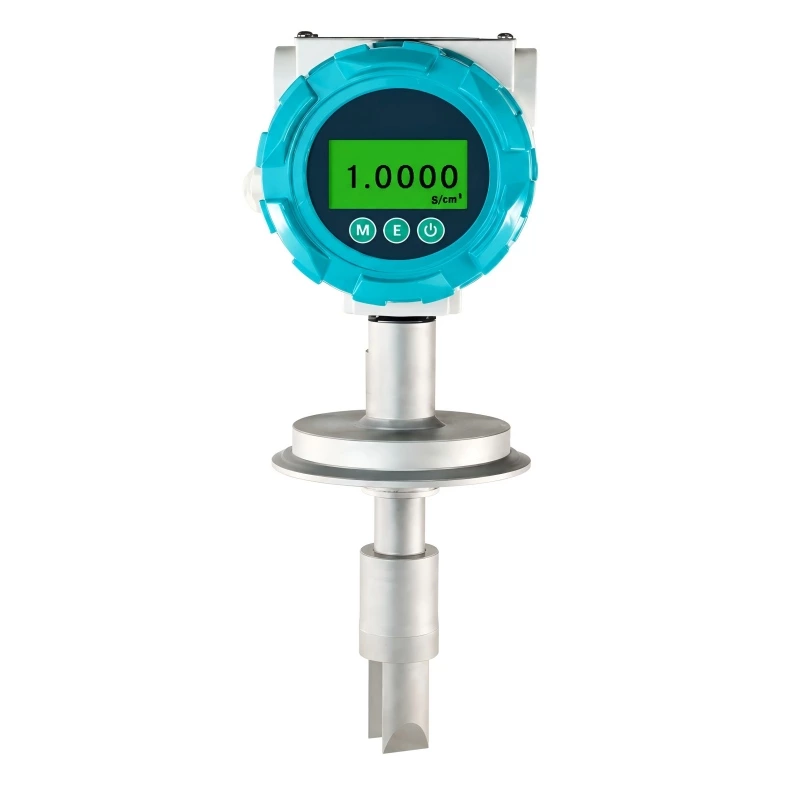
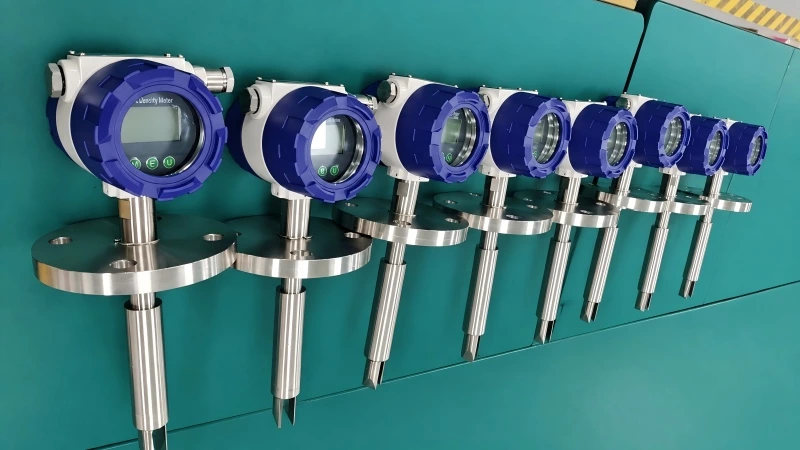
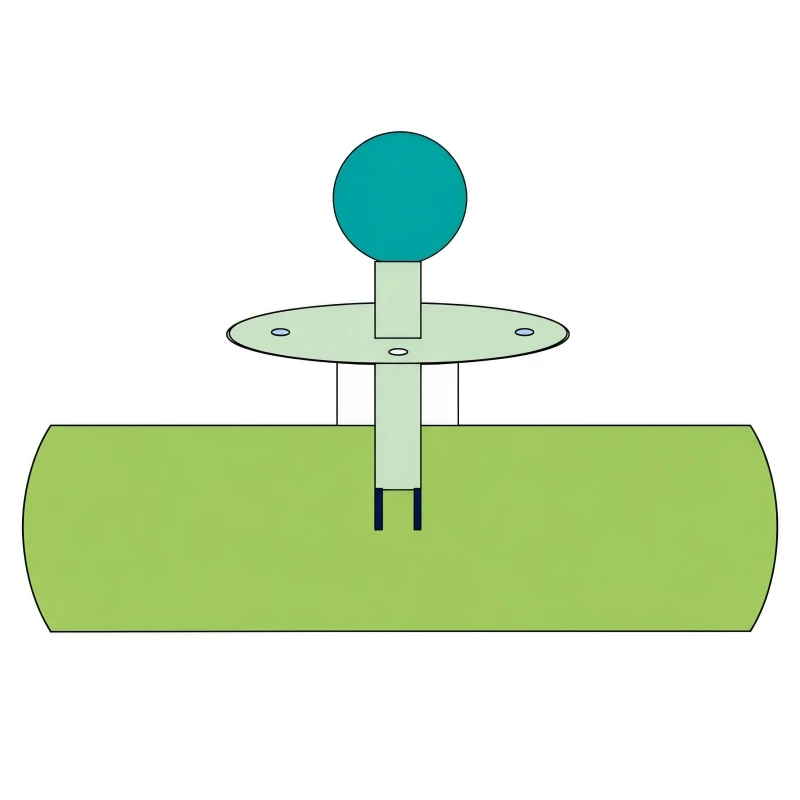
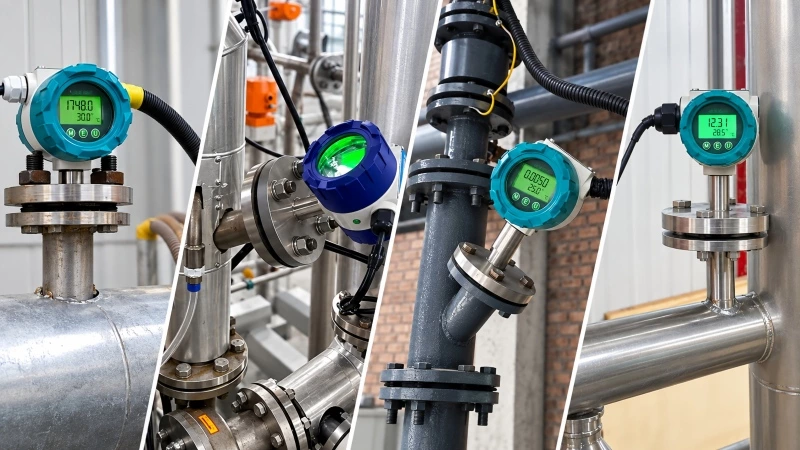
The XY-886 tuning fork density meter is designed for continuous and real-time liquid density measurement in process pipelines and storage vessels. Its insertion-type sensing structure allows the vibrating fork to be installed directly into the process medium for online density monitoring.
The sensing element consists of two piezoelectric crystals. One crystal drives the fork into vibration while the second detects the vibration response. A built-in temperature sensor is used for temperature-related compensation of the sensing element, helping maintain stable density measurement under changing process conditions.
The XY-886 can be applied to pipelines, open tanks and closed storage tanks and can support process monitoring tasks such as product-interface detection, mixture density monitoring, reactor endpoint monitoring and separator interface detection.
Key Features
Continuous Online Density Measurement
Vibrating-Fork Measurement Technology
Built-in Temperature Measurement
Analog and Digital Integration
Flexible Process Connections
Measuring Principle
The XY-886 operates according to the vibrating tuning-fork principle. A piezoelectric crystal located at the root of the fork excites the sensing element into vibration, while another piezoelectric crystal detects the vibration frequency. The vibration response varies according to the density of the process liquid, allowing the electronic processing unit to calculate the corresponding density value.
The relationship used in the product documentation is expressed as:
ρ = K₀ + K₁T + K₂T²
Where:
ρ = liquid density
K₀, K₁, K₂ = density-meter coefficients determined experimentally
T = vibration period, μs
The electronic processing unit calculates the liquid density from the measured vibration period and the calibrated coefficients.
Technical Specifications
| Parameter |
Recommended Website Specification |
| Product |
Tuning Fork Density Meter |
| Model |
XY-886 |
| Measuring Variable |
Liquid density |
| Measuring Range |
0.000-3.000 g/cm³ (0-3000 kg/m³) |
| Calibration Range |
0.000-3.000 g/cm³ |
| Measurement Accuracy |
±0.001 g/cm³ |
| Operating Temperature |
-50 to +150 °C, depending on selected temperature version |
| Maximum Working Pressure |
207 bar (3000 psi) |
| Fluid Viscosity |
0-2000 cP |
| Pressure Effect |
Negligible |
| Temperature Sensor |
PT100 |
| Power Supply |
24 VDC |
| Signal Output |
4-20 mA / RS485 Modbus RTU |
| Process Connection |
Threaded / Flanged / Sanitary; customizable |
| Housing |
Aluminum alloy |
| Protection Rating |
IP65 |
| Explosion Protection |
Ex d IIC T6* |
| Fork / Wetted Material |
See material note below |
| Fork Surface |
Standard / PTFE / Electropolished |
Applications
Pipeline Density Measurement
Continuous online liquid density measurement in industrial process pipelines.
Tank Density Monitoring
Real-time density monitoring in both open and closed storage tanks.
Brewing and Food Processing
Liquid density monitoring in brewing and food-processing applications where continuous process density information is required.
Pharmaceutical Processing
Online density monitoring of compatible process liquids in pharmaceutical production.
Mineral Processing
Density monitoring in mineral-processing applications involving materials such as clay, carbonates and silicates.
Product Interface Detection
Detection of product interfaces in multi-product pipelines and tanks based on changes in liquid density.
Mixing Density Monitoring
Continuous monitoring of the density of agitated or blended mixtures.
Reactor Endpoint Monitoring
Density measurement can be used as a process variable for monitoring changes approaching a reactor endpoint.
Separator Interface Detection
Density measurement for interface detection in separator-related process applications.
Frequently Asked Questions
What does the XY-886 measure?
The XY-886 is designed for continuous online measurement of liquid density in pipelines, open tanks and closed vessels.
What is the density measuring range?
The specified measuring range is 0.000 to 3.000 g/cm³, equivalent to 0 to 3000 kg/m³.
How does a tuning fork density meter work?
One piezoelectric crystal excites the tuning fork while another detects its vibration. The vibration characteristics vary according to the density of the process liquid, and the electronic processing unit calculates the corresponding density value.
Does the XY-886 support RS485 communication?
The product technical indicators list RS485 Modbus RTU, and the operating manual provides an RS485 communication protocol using 9600, N, 8, 1 serial settings.
What process connections are available?
The product specification lists threaded, flanged and sanitary connection options, with customized dimensions available according to application requirements.
Where can the XY-886 be installed?
It can be installed for density measurement in industrial pipelines, open tanks and closed storage tanks. Proper fork clearance and flow orientation should be maintained according to the installation manual.
What industries can use the XY-886?
The supplied product information identifies brewing, food processing, pharmaceutical production and mineral processing, as well as interface detection, mixture-density monitoring and reactor endpoint monitoring.