Supmea Electromagnetic Flow Meter for Water Main Disinfection in Ireland
Project Overview
Water main disinfection is an essential process in municipal water supply infrastructure, helping ensure that newly constructed pipelines meet hygiene and water quality requirements before being connected to existing water distribution networks.
In Ireland, EngTech Services provides professional water main, pipeline, and reservoir disinfection services, including chlorination and dechlorination.
The disinfection process is carried out after successful hydrostatic pressure testing to help eliminate potential contamination and harmful microorganisms, including E. coli, coliform bacteria, enterococci, and Clostridium perfringens.
In this application, a Supmea electromagnetic flow meter is used to measure water flow and support a flow-proportional chlorine dosing system during pipeline disinfection.
Accurate flow measurement provides essential process information for adjusting disinfectant dosing according to the volume of water passing through the pipeline.
Application Challenges
1. Maintaining Pipeline Hygiene
Newly installed water mains may contain construction debris and other contaminants.
Before commissioning, pipelines must be thoroughly cleaned and disinfected to meet the required water quality standards.
The disinfection process must also be verified through appropriate testing and documentation.
2. Controlling Chlorine Dosing
Chlorination is a critical stage of water main disinfection.
The dosing system must introduce disinfectant according to the water flow to support controlled chlorine treatment throughout the pipeline.
Reliable flow measurement is therefore an important part of the proportional dosing process.
3. Monitoring Disinfection Conditions
The disinfection process requires chlorine concentration monitoring, sufficient contact time, pipeline flushing, and dechlorination.
After treatment, water samples must undergo laboratory testing before the pipeline can proceed toward commissioning and connection to the existing water network.
Supmea Electromagnetic Flow Meter Solution
Flow Measurement for Proportional Chlorine Dosing
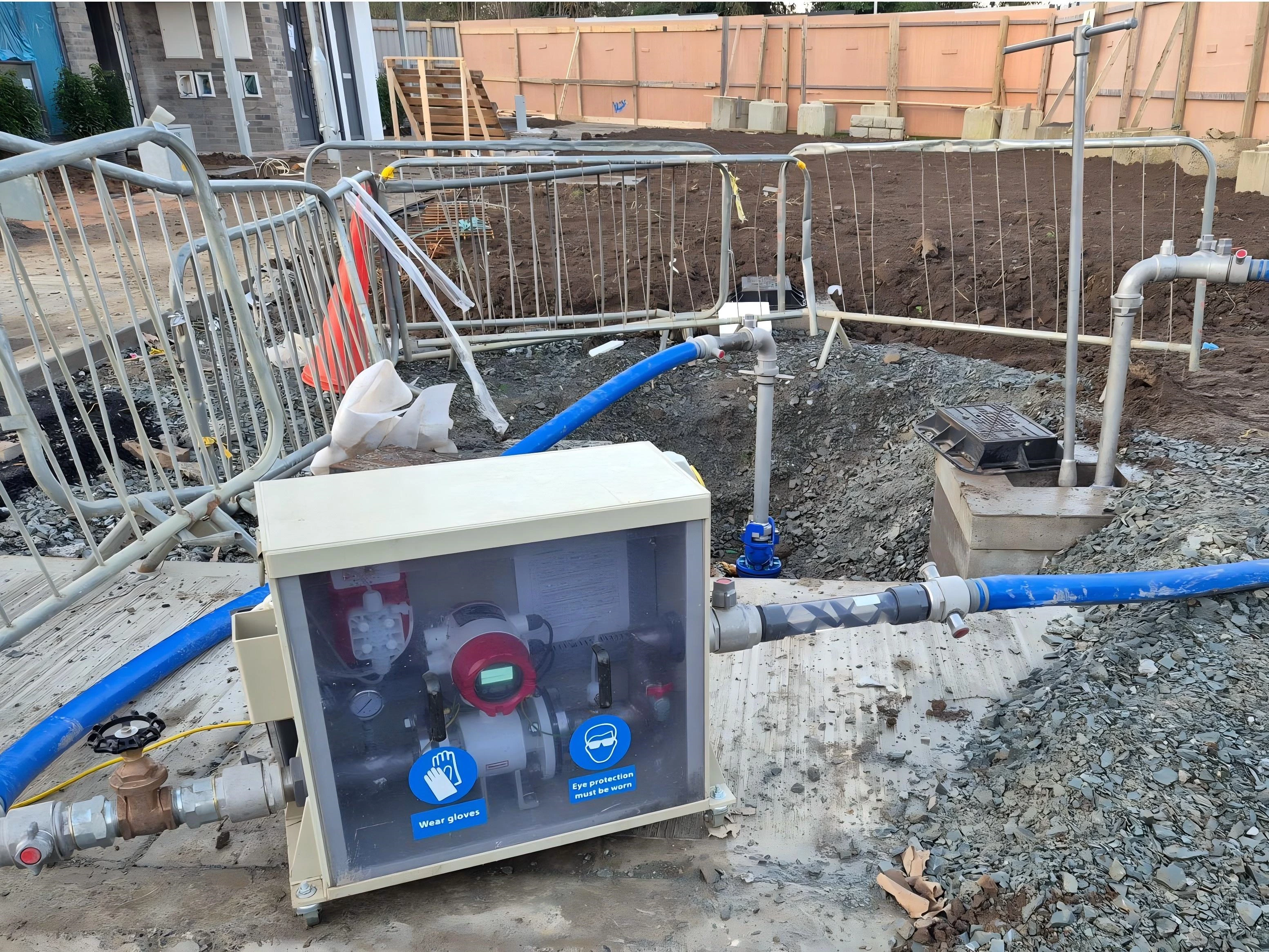
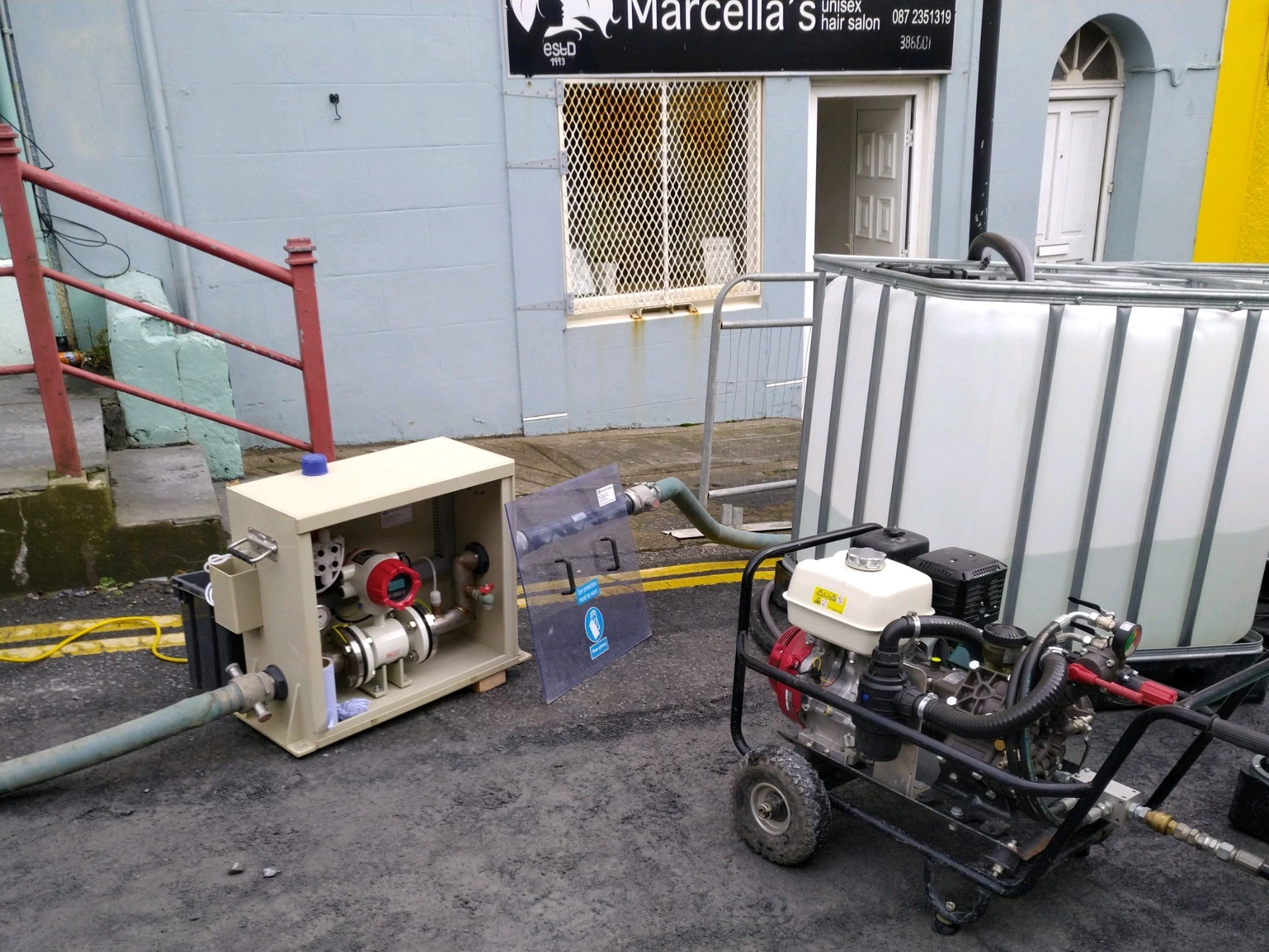
To support the pipeline disinfection process, the system uses a Supmea electromagnetic flow meter together with a flow-proportional dosing unit.
The electromagnetic flow meter measures water flow through the pipeline and provides flow information for the proportional dosing process.
The dosing system uses this information to introduce disinfectant according to the water flow.
This arrangement supports controlled chemical dosing during water main disinfection.
How the Flow Measurement System Works
The process involves four main functions:
1. Water Flow Measurement
The electromagnetic flow meter measures the water flow in the pipeline.
2. Flow-Proportional Dosing
The dosing unit uses flow information to determine the required disinfectant dosing rate.
3. Chlorine Injection
A chemical dosing pump introduces the disinfectant into the pipeline.
4. Chlorine Concentration Monitoring
Digital chlorine testing equipment is used to monitor chlorine levels during the disinfection process.
By combining flow measurement, proportional dosing, and chlorine monitoring, the system supports controlled pipeline disinfection operations.
Related Product: Supmea Electromagnetic Flow Meters
Water Main Disinfection Process
The water main disinfection process involves several stages, from initial pipeline cleaning to laboratory verification and commissioning.
Step 1: Pipeline Cleaning
Before chlorination, the pipeline undergoes flushing and/or swabbing to remove construction debris and other materials from internal surfaces.
This initial cleaning stage prepares the pipeline for the subsequent disinfection process.
Step 2: Chlorine Injection
A high-concentration chlorine solution is introduced into the pipeline.
The disinfectant remains in contact with the internal pipeline surfaces for approximately 20–24 hours, as specified in the project process.
During this stage, flow-proportional dosing equipment supports the introduction of disinfectant according to water flow.
Step 3: Chlorine Residual Testing
After the required contact period, chlorine concentration is checked to determine whether the minimum disinfection requirements have been met.
If the chlorine levels satisfy the specified requirements, the pipeline proceeds to the flushing stage.
Step 4: Flushing and Dechlorination
The pipeline is flushed with potable water to remove the highly chlorinated water.
During flushing, the discharged chlorinated water undergoes dechlorination at the outlet.
Flushing continues until the chlorine concentration at the end of the pipeline approaches the concentration of the original water supply.
Step 5: Water Quality Sampling
Following disinfection and flushing, water quality samples are collected and transported to an INAB-accredited laboratory.
The samples are tested for bacteriological contamination and disinfection residuals according to the relevant Uisce Éireann specifications.
Step 6: Laboratory Reporting and Commissioning
After laboratory results are received, a formal chlorination report is prepared.
The report includes the bacteriological analysis results and is submitted to Uisce Éireann.
If the required results are satisfactory, the water main can proceed toward commissioning and connection to the existing water distribution network.
Equipment Used in the Disinfection System
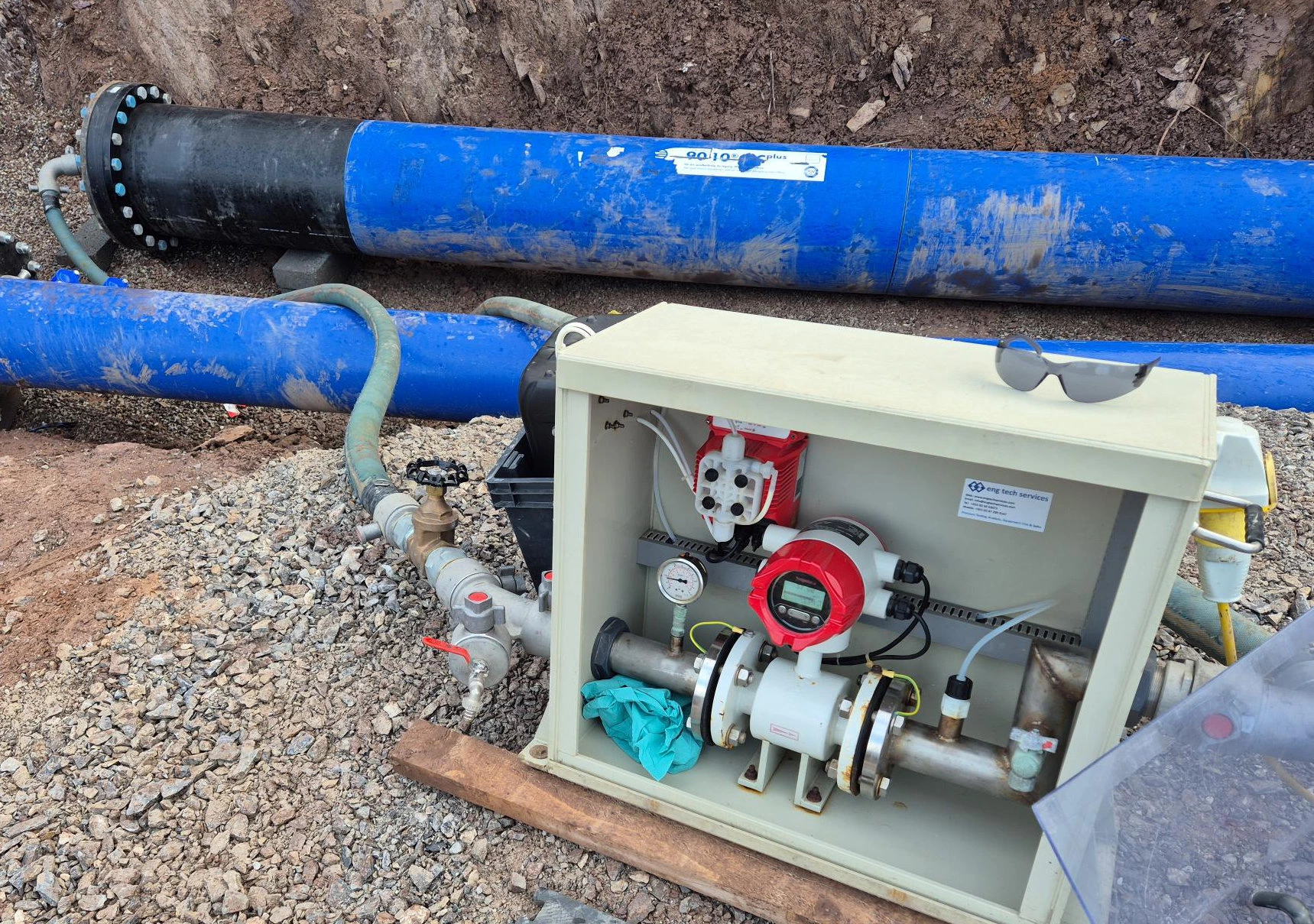
The water main disinfection process involves several types of equipment.
| Equipment | Function |
|---|---|
| Flow Proportional Dosing Unit | Introduces disinfectant in proportion to water flow |
| Supmea Electromagnetic Flow Meter | Measures pipeline water flow for proportional dosing |
| Chemical Dosing Pump | Injects disinfectant into the pipeline |
| Portable Chlorine Photometer | Measures chlorine concentration during disinfection and flushing |
| Mechanical Pressure Gauge | Monitors pipeline pressure |
The electromagnetic flow meter provides flow measurement information, while the dosing and monitoring equipment supports the chlorination process.
On-Site Installation and Disinfection Operations
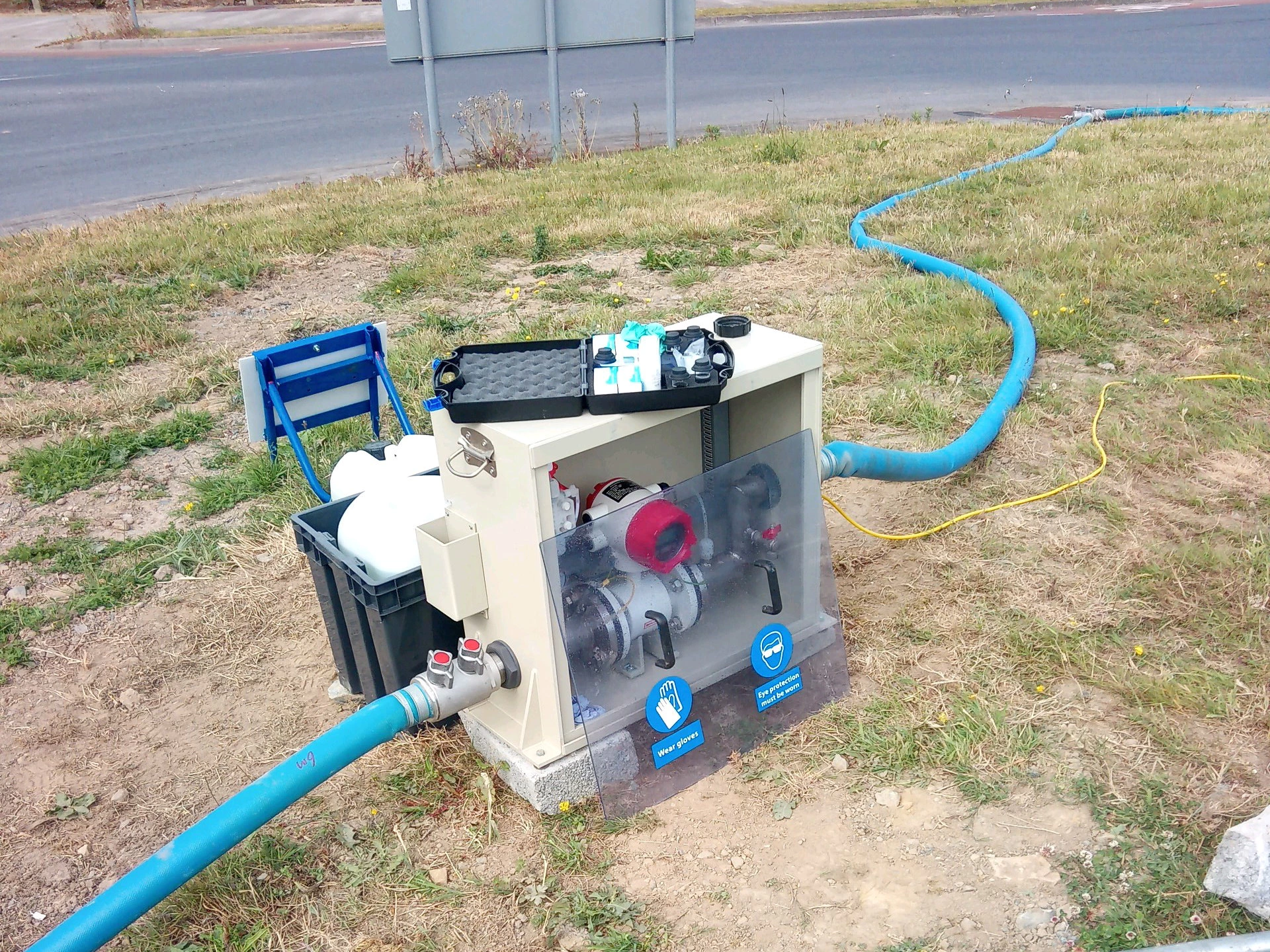
The project photographs show the practical implementation of pipeline disinfection activities in Ireland.
The documented activities include equipment installation, pipeline connections, chlorine testing, chemical dosing, water sampling, dechlorination, and pipeline cleaning.
Equipment Installation and Pipeline Connections
The disinfection equipment is connected to the water pipeline to support chemical dosing and treatment operations.
Chlorine Monitoring and Water Quality Testing
Portable testing equipment is used to monitor chlorine concentration during the disinfection process.
Water samples are collected for subsequent laboratory analysis.
Pipeline Flushing and Dechlorination
After the required chlorine contact period, the pipeline is flushed with potable water.
Dechlorination equipment is used to treat the highly chlorinated water discharged during flushing.
These operations form part of the overall water main disinfection and water quality verification process.
Water Quality Verification and Commissioning
Water quality verification is an important requirement before newly constructed water mains can be connected to the existing supply network.
The process includes:
-
Chlorine concentration monitoring during disinfection.
-
Pipeline flushing and outlet dechlorination.
-
Collection of water quality samples.
-
Laboratory testing for bacteriological contamination and disinfection residuals.
-
Preparation and submission of a formal chlorination report.
The commissioning process depends on satisfactory laboratory results and submission of the required documentation to Uisce Éireann.
The Role of Electromagnetic Flow Meters in Water Treatment
Electromagnetic flow meters are widely used for measuring the flow of conductive liquids in industrial and municipal water applications.
In water treatment systems, flow measurement can support processes such as chemical dosing, water distribution monitoring, and process control.
For water main disinfection applications, an electromagnetic flow meter can provide water flow information to a proportional dosing system.
This enables the dosing equipment to adjust disinfectant injection according to water flow.
The Ireland project demonstrates how electromagnetic flow measurement can be integrated into a pipeline disinfection process alongside chemical dosing and chlorine monitoring equipment.
For additional flow measurement solutions, explore:
Water & Wastewater Treatment Solutions
Frequently Asked Questions
What is the purpose of an electromagnetic flow meter in water main disinfection?
An electromagnetic flow meter measures water flow through the pipeline and provides flow information for proportional chlorine dosing.
This supports controlled disinfectant injection during the disinfection process.
Why is flow-proportional chlorine dosing important?
Flow-proportional dosing allows the dosing system to adjust disinfectant injection according to water flow.
It helps coordinate chemical dosing with the amount of water passing through the pipeline.
How long does chlorine disinfection take?
In the described Ireland application, the chlorine solution remains in contact with the internal pipeline surfaces for approximately 20–24 hours.
The overall process also includes cleaning, testing, flushing, water sampling, and laboratory verification.
What happens after pipeline chlorination?
After the required contact period, chlorine levels are checked.
The pipeline is then flushed with potable water, and the discharged highly chlorinated water is dechlorinated.
Water samples are subsequently collected for laboratory analysis.
How is water main disinfection verified?
Water main disinfection is verified through chlorine monitoring, water quality sampling, and laboratory testing.
A formal chlorination report containing the required test results is submitted before commissioning and connection can proceed.
Explore Supmea Flow Measurement Solutions
Reliable water flow measurement is an important part of many water treatment and distribution processes.
Supmea provides electromagnetic flow meters and other industrial flow measurement instruments for a variety of applications.
Whether you are working on municipal water infrastructure, industrial water treatment, or chemical dosing systems, selecting a suitable flow measurement solution requires consideration of the actual process conditions.
Looking for an electromagnetic flow meter for your water treatment project?
Contact Supmea to discuss your flow measurement requirements and explore suitable instrumentation solutions.